Case study
Enabling consistency and faster delivery
Unblocking a re-branding through a design system and building the foundation for a more consistent, higher-quality, collaborative culture.
- Company
- CommonBond
- Role
- Product Designer
- Timeline
- 3 months
- Year
- 2022
What I owned
- Owned the token architecture
- Built the Figma-to-code workflow
- Established the 3-squad governance model
Outcomes
- Tokenized design system automating Figma-to-code workflow
- Theming enabled across all CommonBond products
- Governance model adopted across 3 product squads
CommonBond, a fintech company offering student loan and solar financing products, was planning a brand refresh. The refresh surfaced a deeper problem: tech debt and organizational silos meant teams were independently solving the same problems with incompatible solutions. The brand work couldn’t ship until the underlying system caught up. The fix wasn’t a component library — it was tokens and a governance model that three product squads could adopt and keep building on.
Silos were the real problem
When teams across CommonBond responded to the brand change, everyone jumped into problem-solving mode independently. Design, engineering, content, and compliance were all working toward consistency, quality, and efficiency — reinventing the same wheel in different silos.
I saw an opportunity to step back from the pixels and facilitate something more valuable: a shared understanding of the problem.
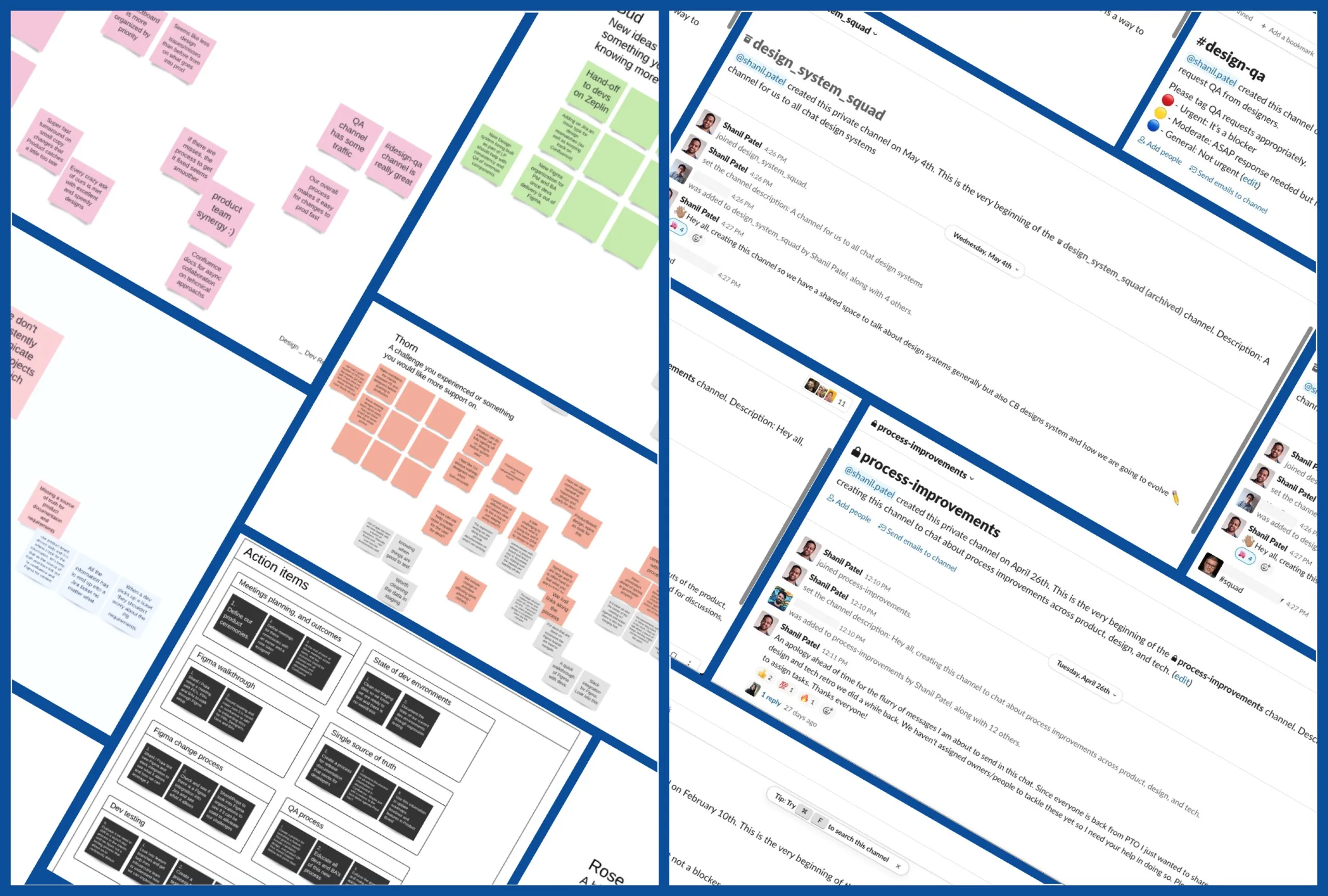
Through cross-functional workshops and stakeholder interviews, I helped surface what everyone already knew individually: we had the same problems, and solving them separately was making things worse.
Governance before components
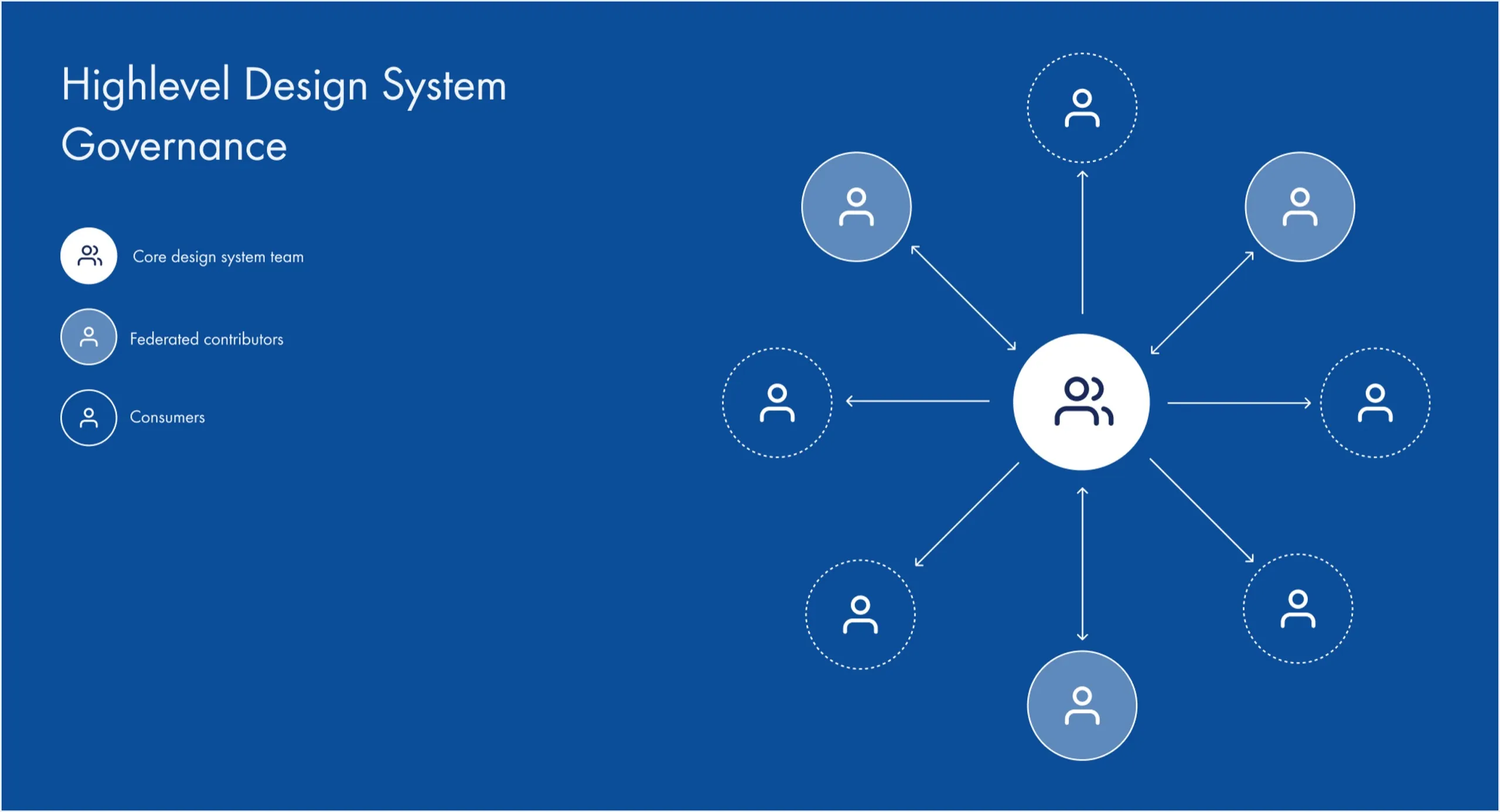
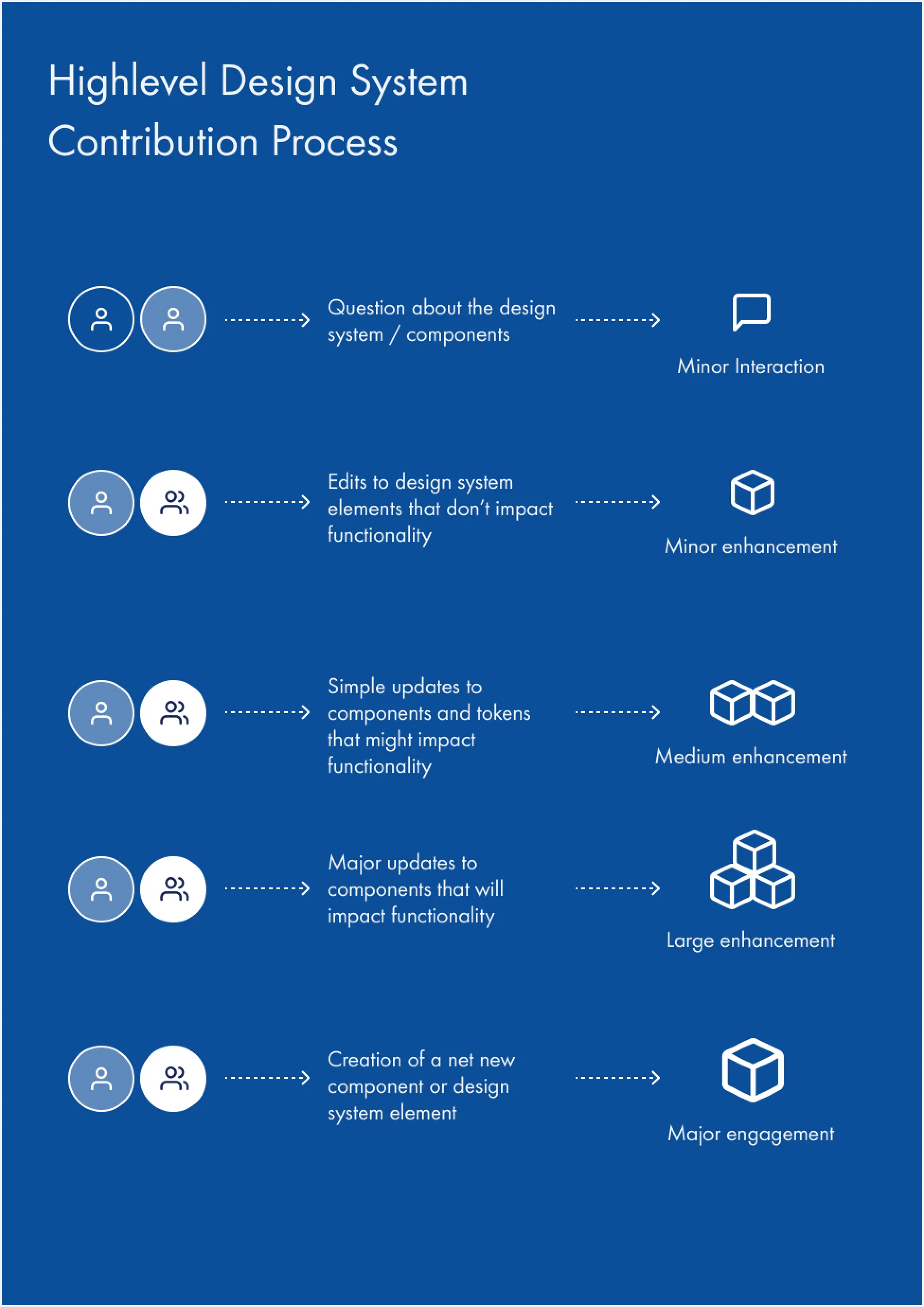
The solution was a tokenized design system with a governance model everyone understood and could participate in. A small core team maintained quality and standards. Ambassadors embedded in product squads handled education and local contribution. Consumers across the org had clear expectations for what the system provided.
By agreeing on governance first, teams could solve their unique problems without stepping on each other.
Theming without Figma variables
The primary design challenge was enabling theming across multiple products — this was pre-Figma-variables, before that was a native capability.
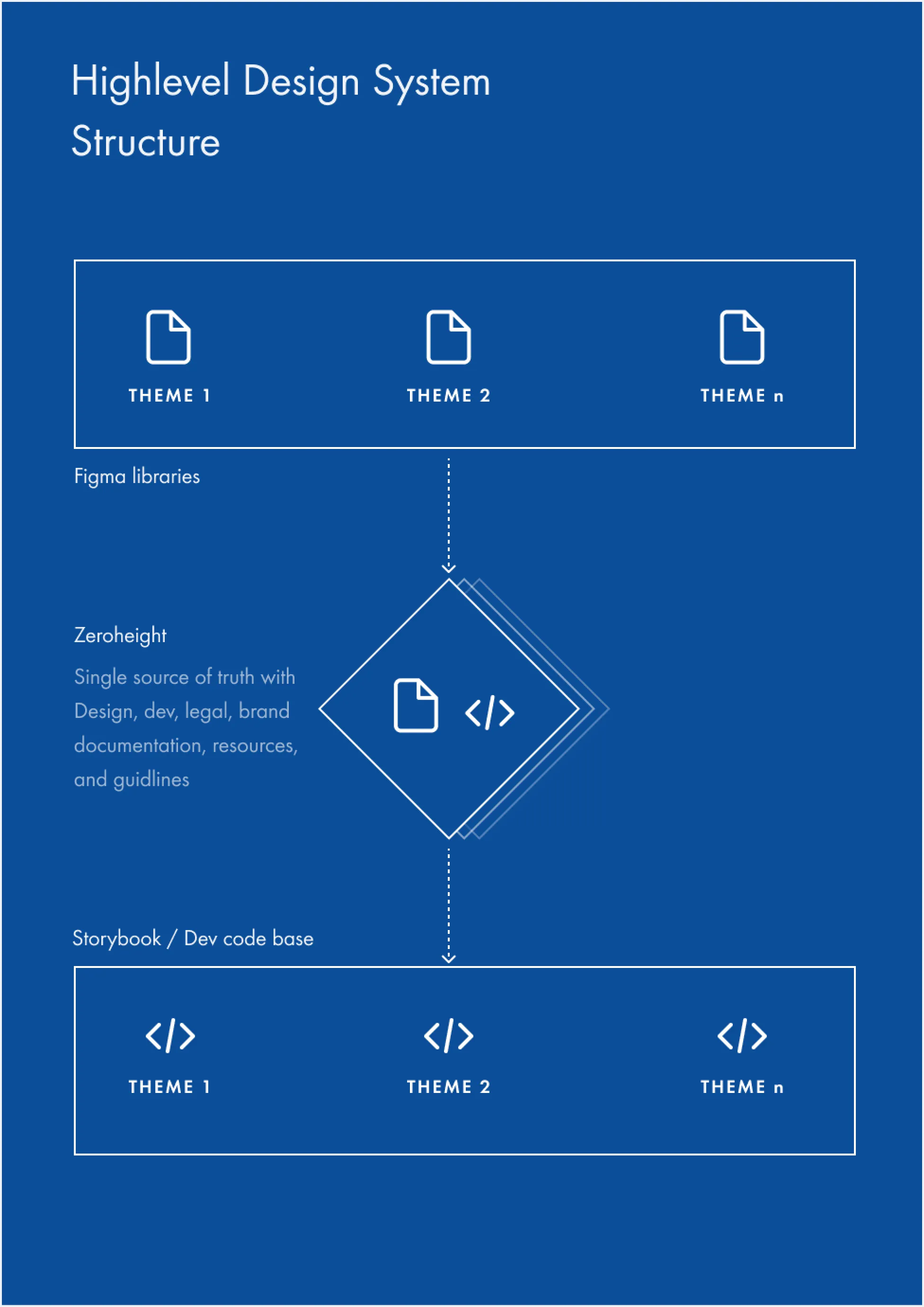
Florencia and I started with a thorough audit of the existing system, then worked closely with engineering to understand how components were actually implemented in code. The gap between Figma and production was significant.
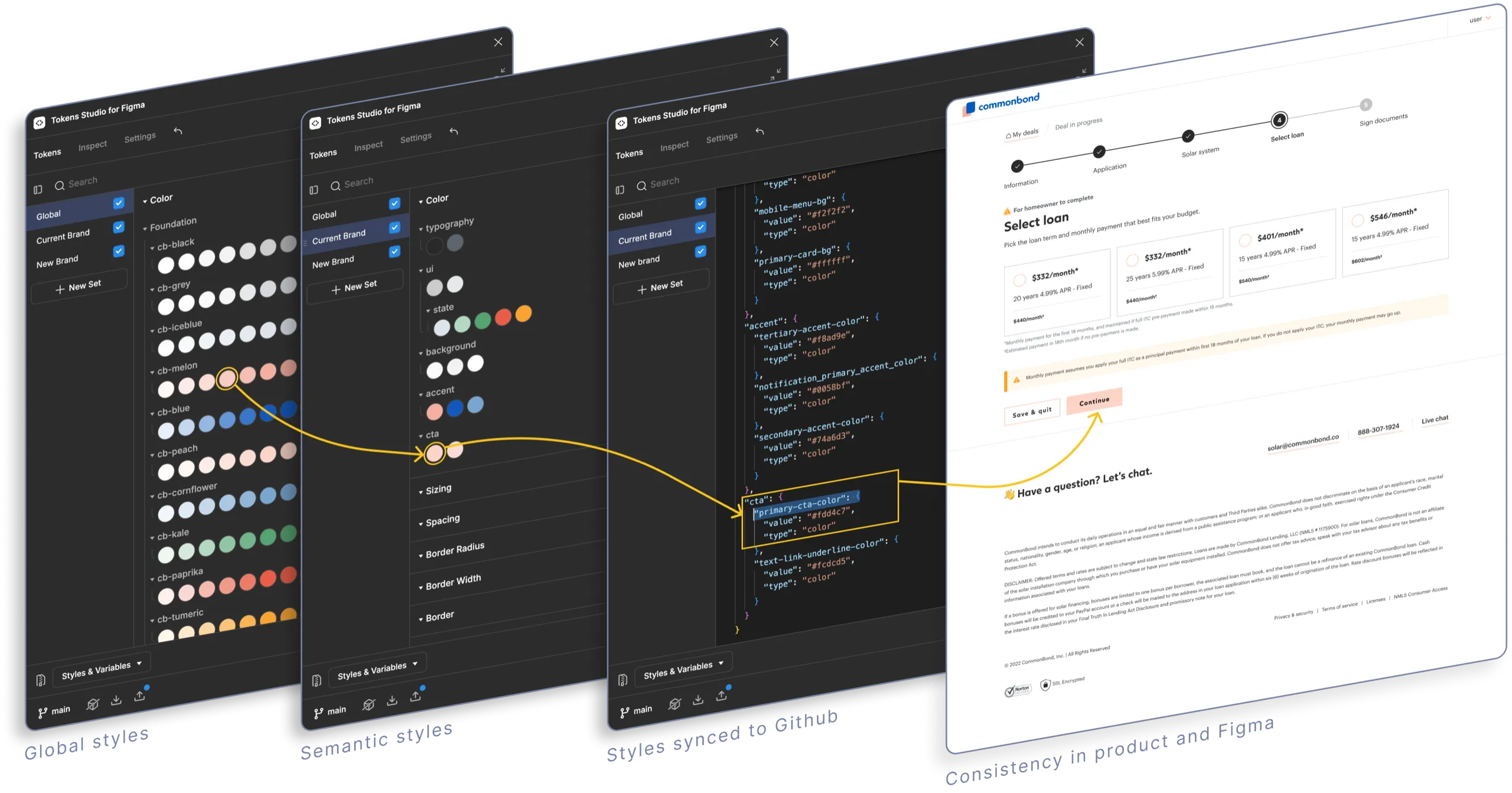
Working with engineering, we found a way to build tokenization that automated the transition from Figma to code, eliminating the ongoing delta between design files and production and reducing management overhead for both teams.
The tokenization work made the brand refresh feasible: any future rebrand or product variant could be executed at the token level rather than requiring manual updates across hundreds of components.
Outcome
- For the business: the brand refresh unblocked, with future rebrands executable at the token level rather than across hundreds of components.
- For customers: consistent, coherent experiences and theming across every CommonBond product.
- For the team: a governance model adopted across 3 squads and tokenization that closed the gap from Figma to code.
CommonBond closed in late 2022, limiting the full realization of this work. The design system framework and governance model continued to inform how I approach systems design.
What this project reinforced
Design systems are not a design team deliverable. They are an organizational lever for culture change toward consistency, quality, and shared ownership. Getting the governance right matters as much as getting the tokens right.