Case study
Defining and delivering a vision
Inspiring a global community to re-think data exploration and co-creating with them in the open source.
- Company
- AWS · OpenSearch
- Role
- Product Designer
- Timeline
- 8 months
- Year
- 2024
What I owned
- Led IA through hi-fi UX
- Ran the lean research program
- Built the variable-based Figma prototypes
- Designed in the open on GitHub
Outcomes
- 20+ duplicative features unified into a single, coherent tool
- Inspired a global open-source community to rethink data exploration
- Established a data-informed approach incorporating user research throughout
OpenSearch Dashboards contained multiple overlapping data exploration features, creating scalability challenges and genuine user confusion. Over eight months I led the effort to unify and elevate the experience — making it easier for users to understand what happened, when, and why with their digital products. Because the work happened in the open, the result became something a global community could keep building on long after I moved on.
Turning skeptics into advocates
Initial resistance to research was real: time constraints made stakeholders skeptical. I implemented lean research practices and shared findings incrementally, which turned skeptics into advocates. Each round of results secured the space for deeper investigation.
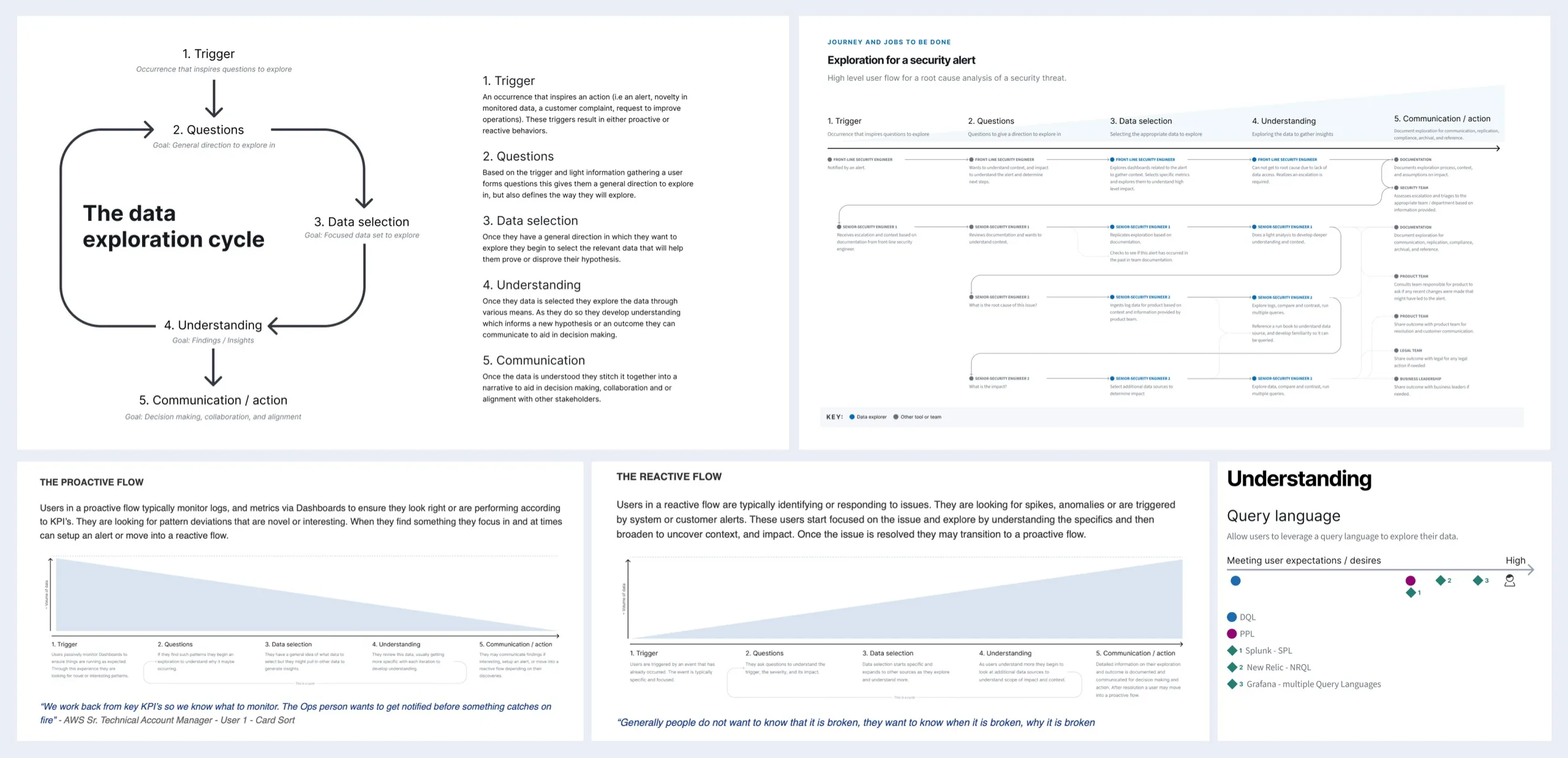
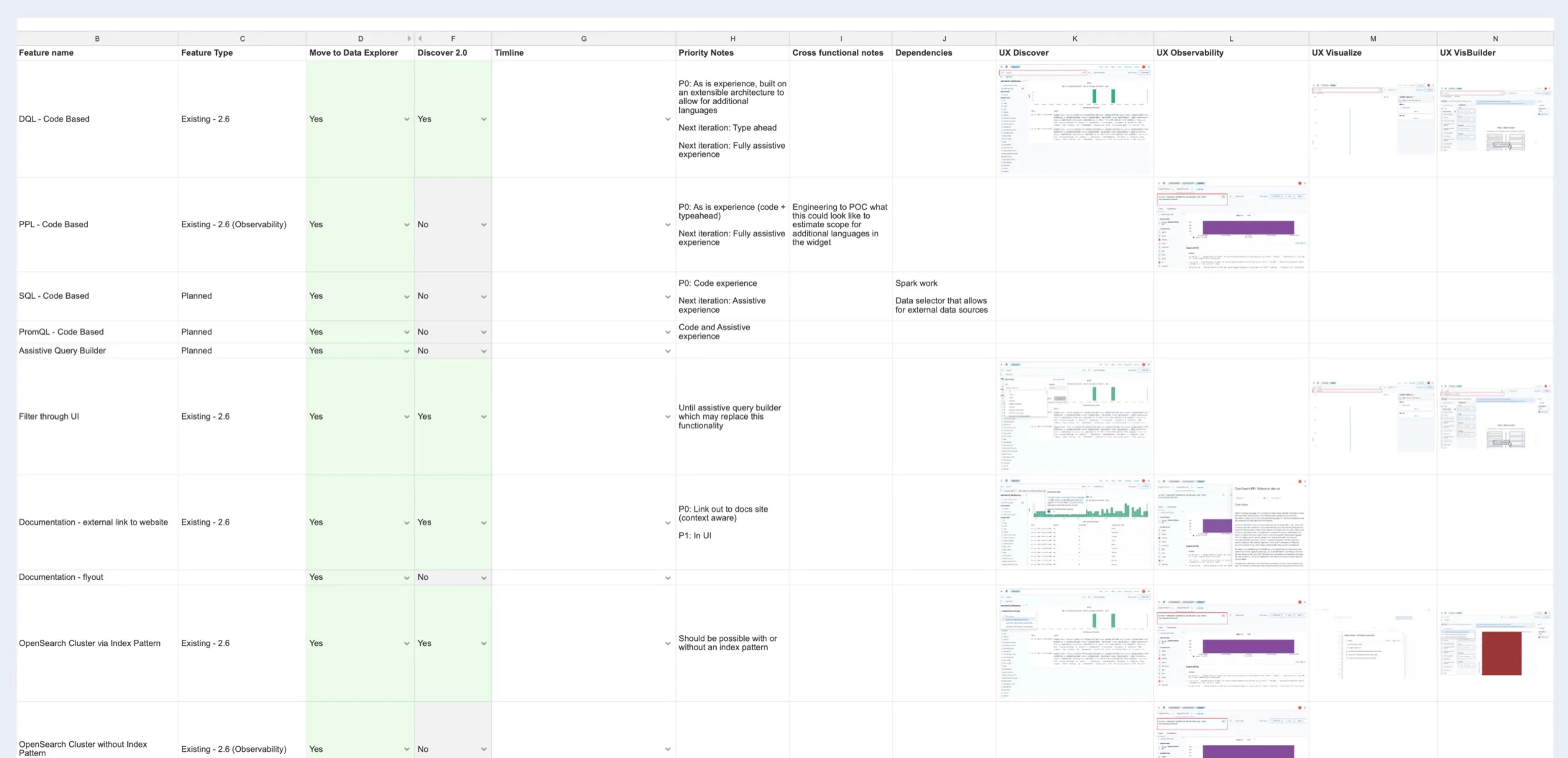
Research spanned contextual inquiry, journey mapping, generative research, competitor analysis, and feature roadmapping. The most significant discovery wasn’t a usability finding — it was critical technical debt that would have caused serious problems if overlooked.
Confidence, not just conviction
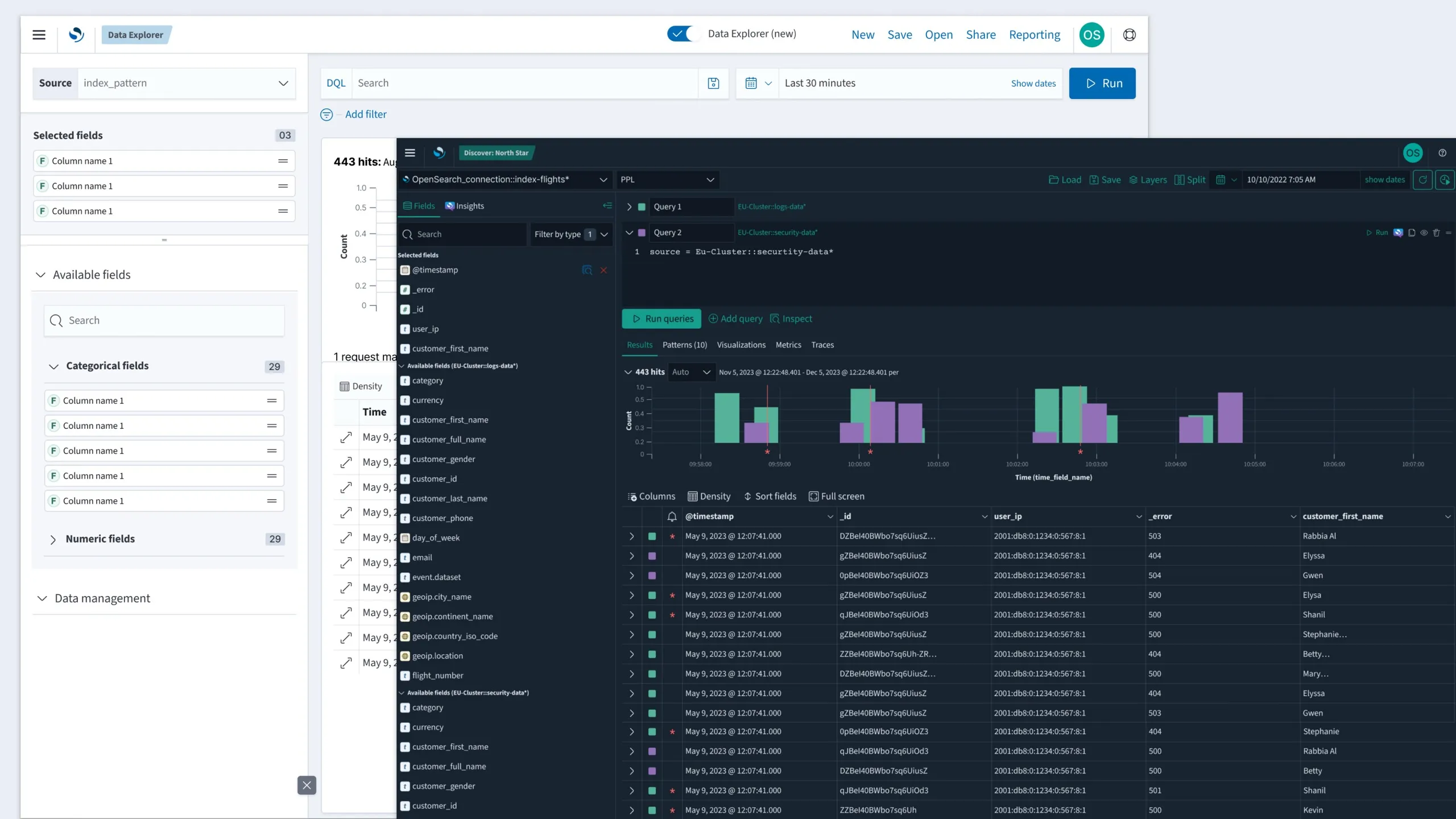
Over six months the work progressed from information architecture through sketches and wireframes to high-fidelity design. The level of fidelity at each stage was chosen deliberately based on how much confidence we had in the underlying decisions. When things were uncertain, we stayed loose. When we had alignment, we invested in detail.
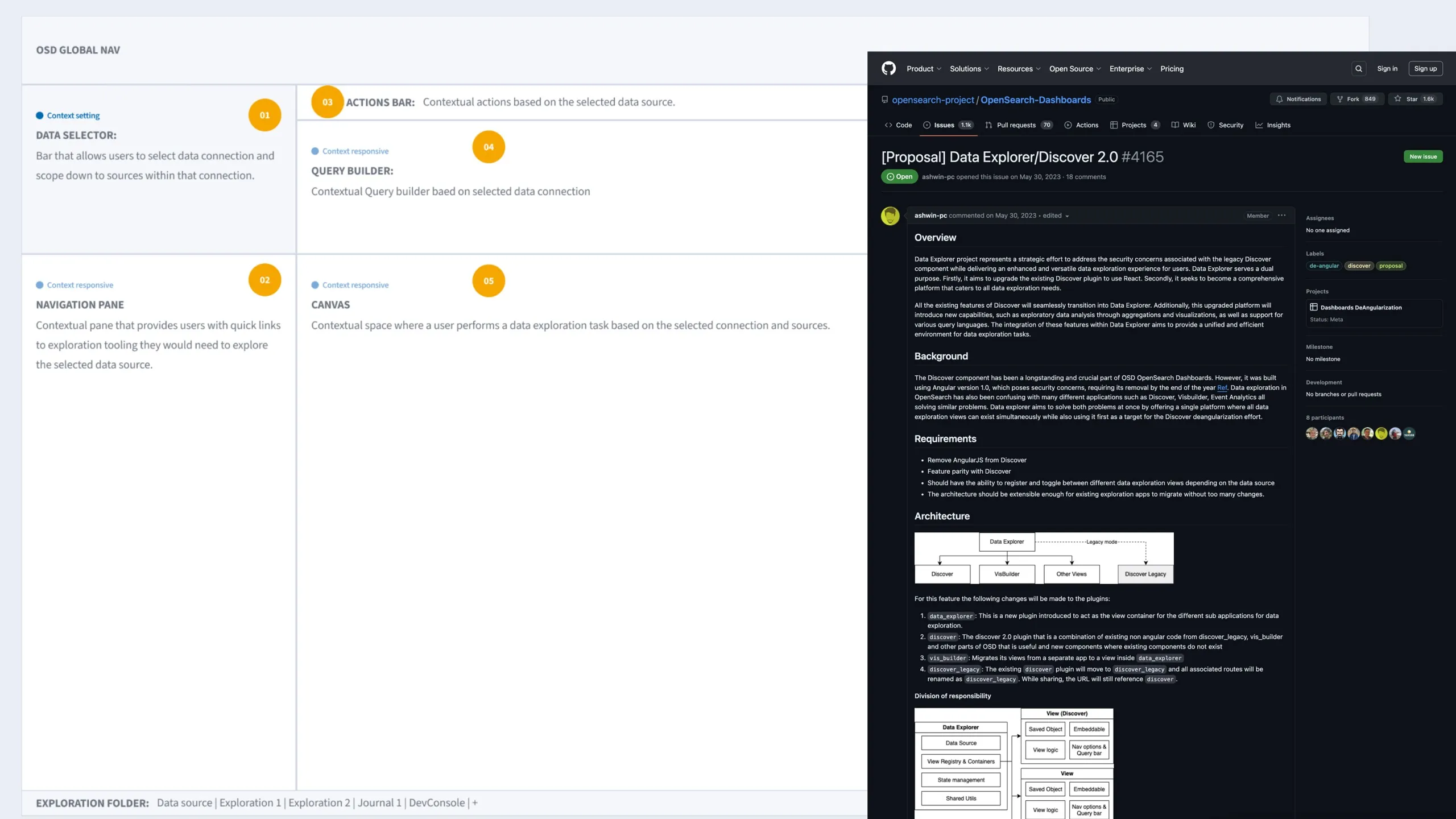
Working through the architecture with engineering revealed where the framework needed to be flexible and where structure was essential. The open-source ethos meant anyone should be able to build on top of what we created.
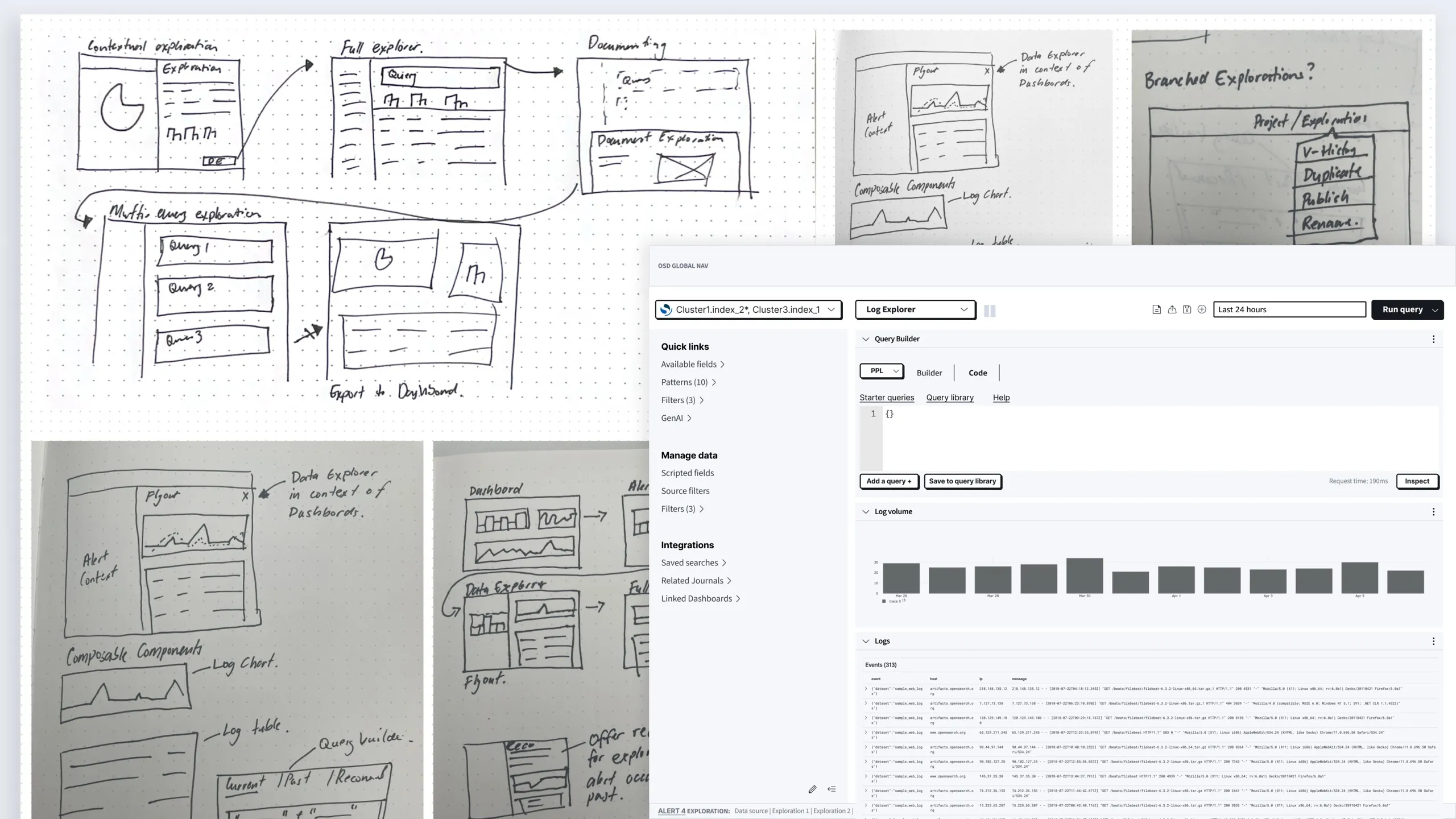
As confidence grew, fidelity increased. Hi-fi designs were used for usability testing, community feedback, and stakeholder communication.
Prototyping without engineering
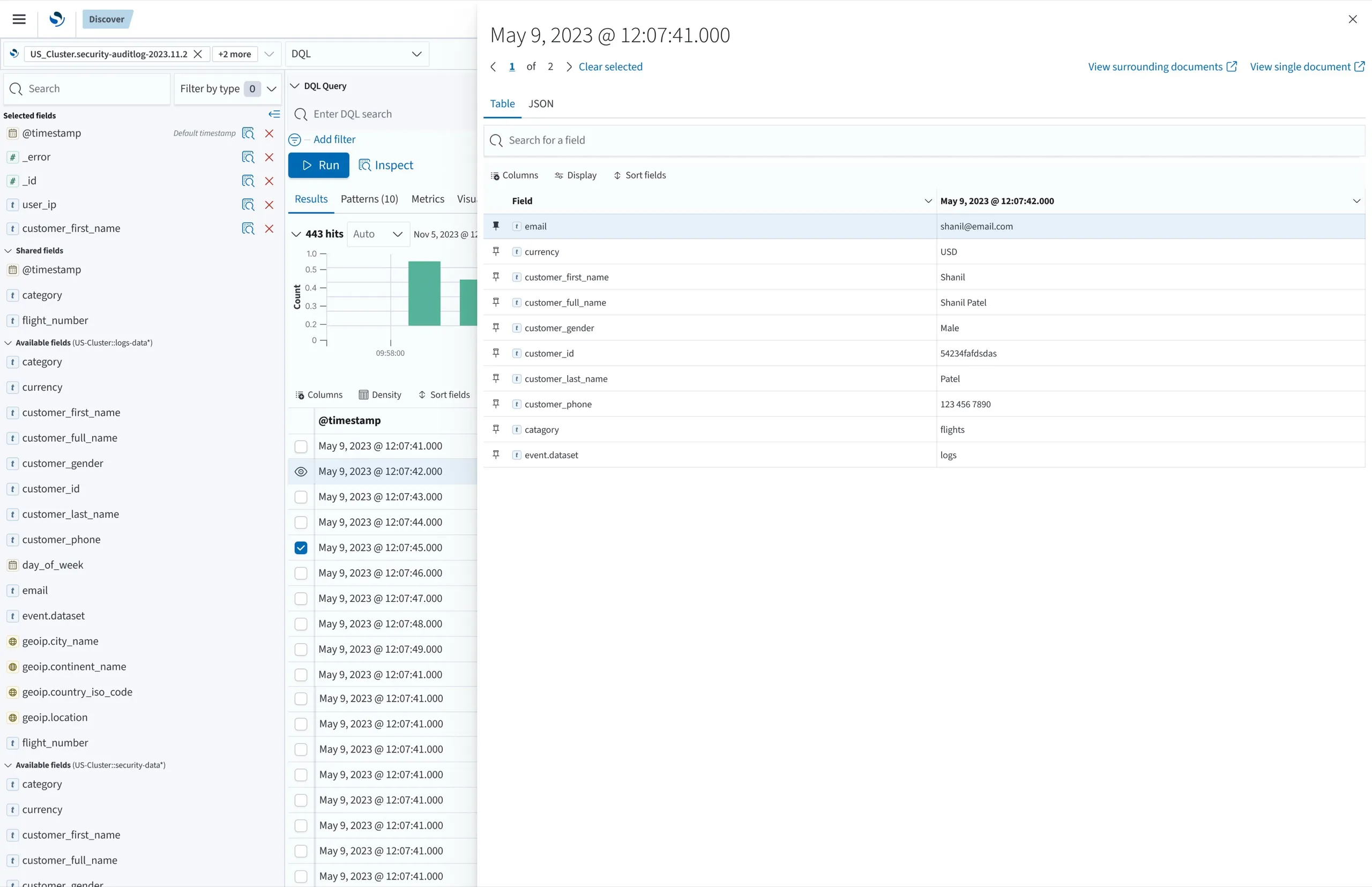
Variable-based, component-level prototyping in Figma enabled rapid iteration and produced nuanced prototypes without waiting on engineering resources. These prototypes drove stakeholder alignment, informed the global OpenSearch community, and made usability testing more productive.
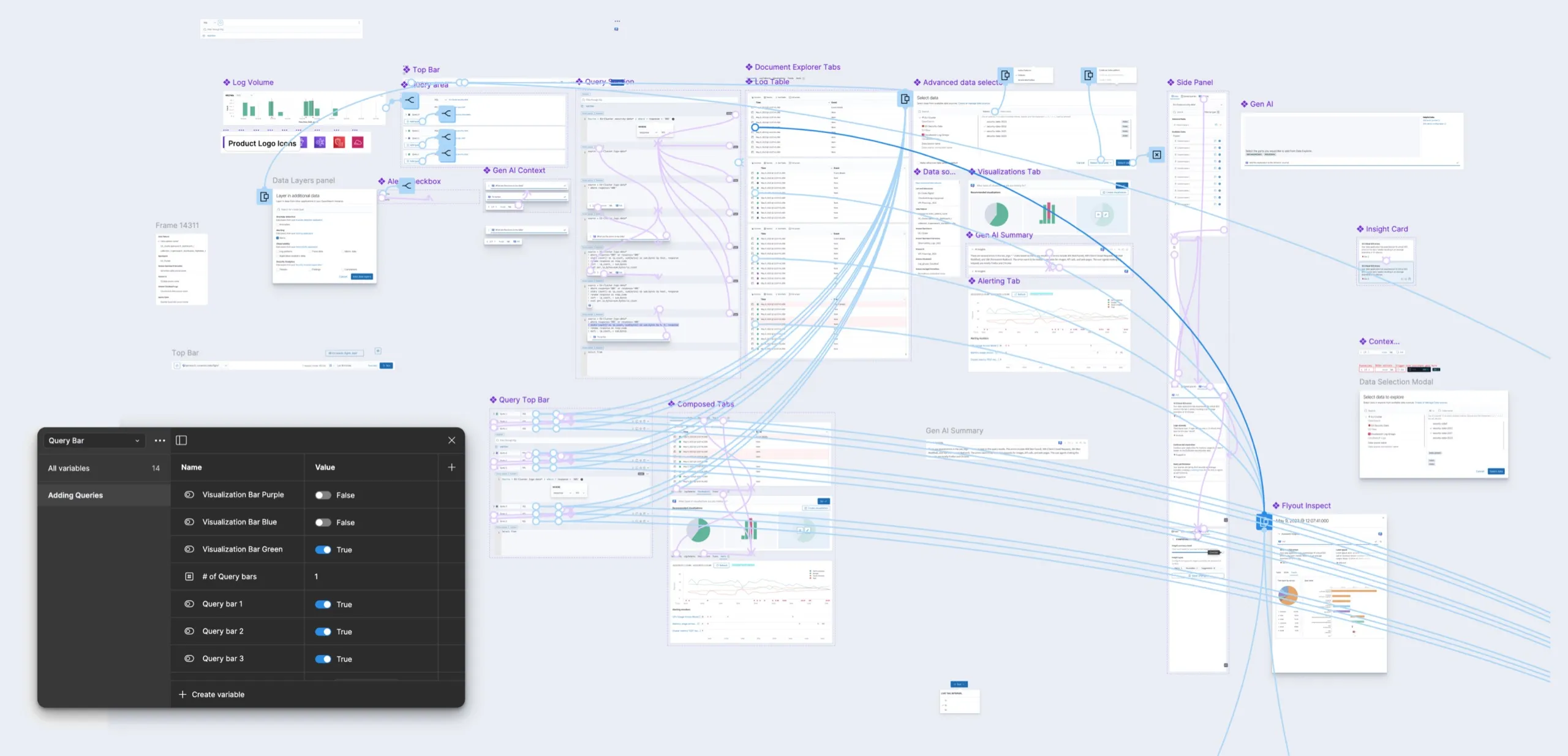
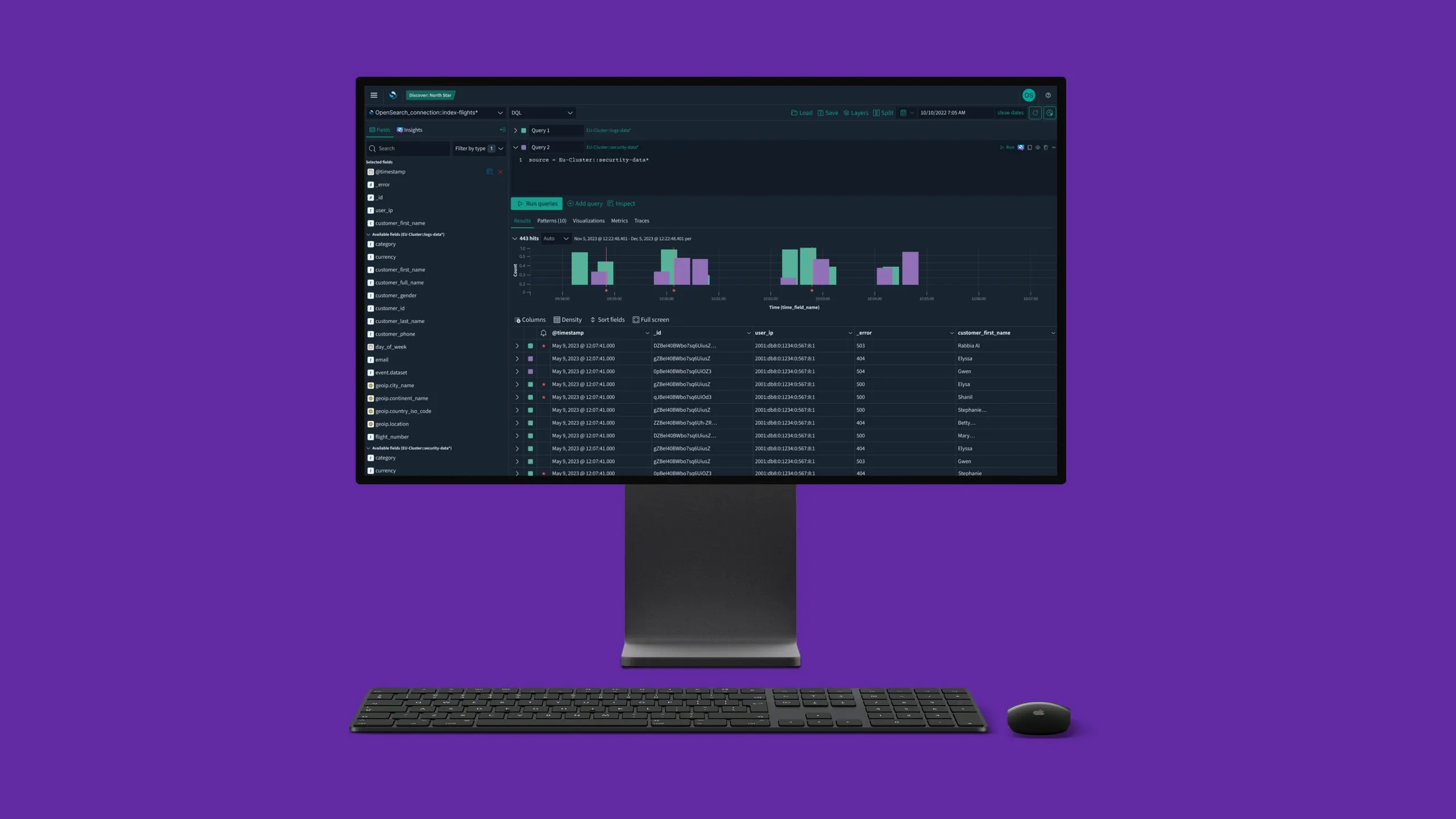
The final inspect and query experience brought together data source selection, query input, and result visualization in a unified interface.
Designing in public on GitHub
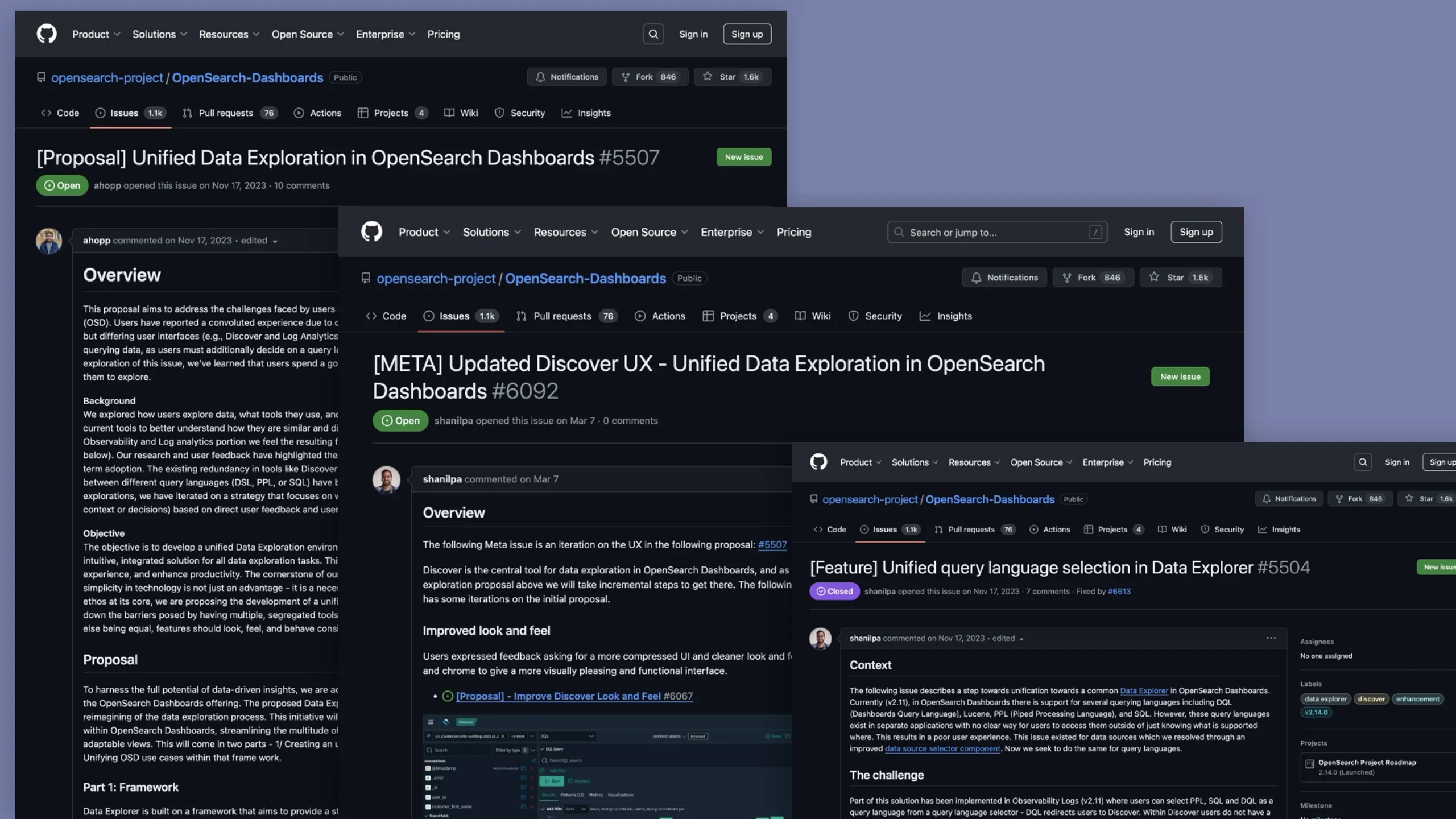
Proposals, feature requests, and issues were published publicly in GitHub — raising awareness with the open-source community while creating a single thread from strategy through execution that aligned UX, engineering, and product management.
Outcome
- For the business: 20+ duplicative features unified into one coherent tool, easing scalability and years of technical debt.
- For customers: a single, clear way to explore data and understand what happened, when, and why.
- For the team: a research practice grounded in data, designed in the open, that a global community keeps building on.
“We tasked Shanil with conceptualizing the next generation experience of exploring data in OpenSearch. Not only did he end up designing delightful new experiences for our customers, but he did so in a way that helped drive the open source vision for OpenSearch.”
— Eli Fisher, Senior Manager PM, AWS